
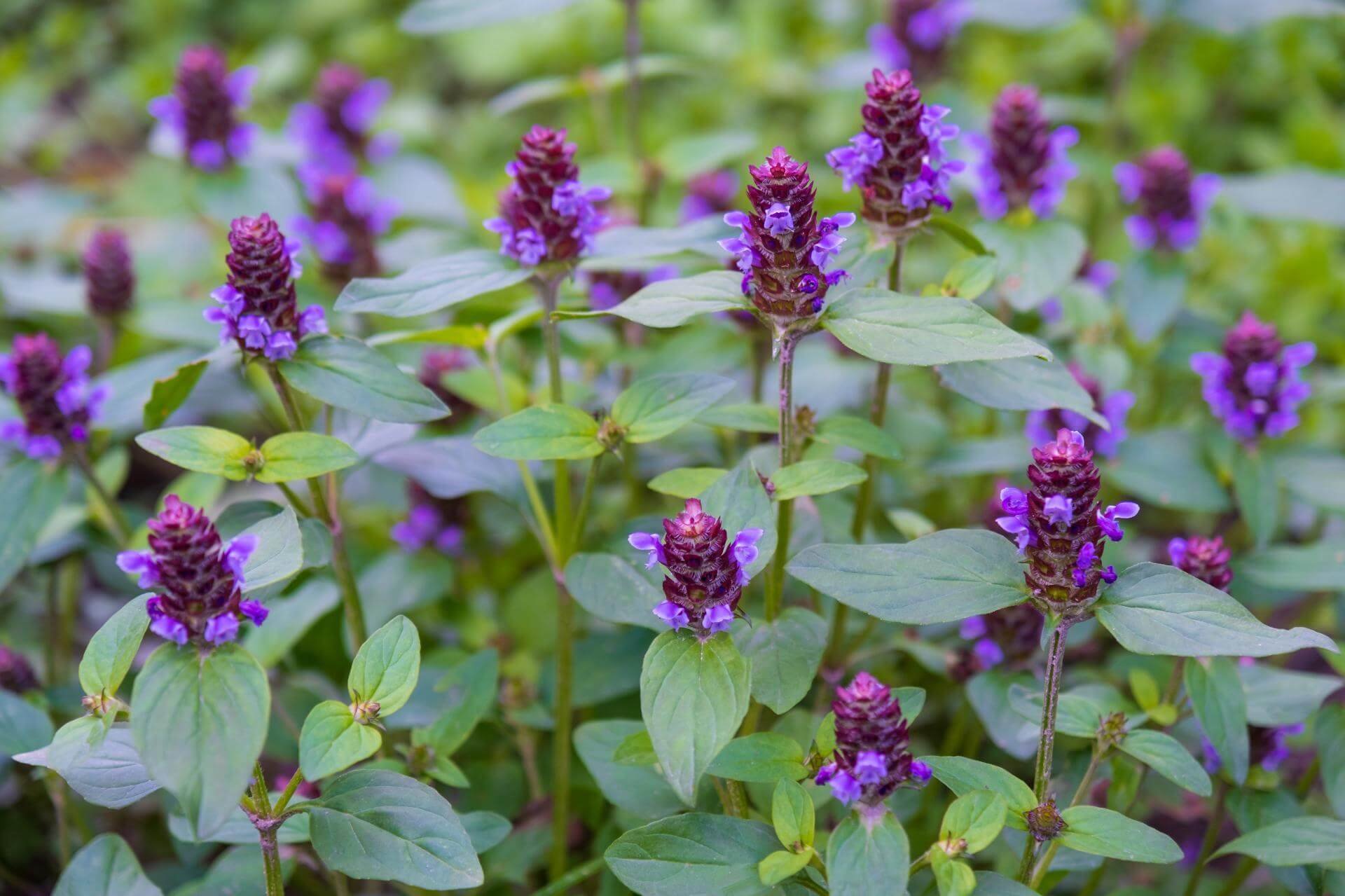
Prunella vulgaris
By Dr. Ashraf Girgis
Prunella vulgaris L. belongs to the mint family Lamiaceae. There are 9 varieties, it is wildly grown in Iran, Mediterranean region, Pakistan, as well as East Asia such as China, Japan, and Korea. Traditionally, it has been used in treating wounds and the management of diabetes, in addition to its benefits as an immune modulator.
Constituents:
So far there has been 200 various constituents isolated, however the constituents mostly belong to triterpenoids, steroids and flavonoids, as well as polysaccharides, volatile oils, and coumarins.
Medicinal effects:
Prunella vulgaris is known as a HEAL-ALL, due to its traditional valuable benefits. It has been used in wound healings, and as mentioned in immune system modulations as well as in diabetes.
So far, most studies been conducted on animals. In one study scientists tried to see the effects of prunella vulgaris in mice to evaluate its impact in treating diabetes, lowering pain, and its anti-oxidant effects. This is due to Prunella vulgaris containing rosmarinic acid (RA), rich in caffeic acid (93.4%) and coumaric acid (pCA) (11.6%). The rich content of caffeic acids results demonstrated a lower level of blood sugar, ameliorated thermal hyperalgesia (highly sensitive to pain), and tactile allodynia (extremely low threshold for pain, even to the things that does not normally cause pain).
Scientists concluded that caffeic acids in prunella vulgaris increased the serum-insulin. Its reduction of alpha-amylase and alpha-glucosidase, and its antioxidant effects, may be responsible for their antidiabetogenic and antinociceptive actions. In conclusion, caffeic acids fractions (CAF) constituents found in Prunella vulgaris can be a potential therapeutic agent to ameliorate type one diabetes and its complications.
In another study, scientists used isolated different constituents from an infusion prepared. They isolated rosmarinic acid from the areal part of the plant. The wound healing mechanisms of the pure compounds were investigated by performing assays to inhibit the enzymes hyaluronidase, collagenase, and elastase. Ursolic acid, chlorogenic acid, and rosmarinic acid were found to be responsible for the anti-inflammatory and wound healing effects.
Conclusion:
The experimental study revealed that Prunella vulgaris showed significant wound healing and anti-inflammatory activities. As well as, anti-diabetic, in-vivo antioxidant and anti-nociceptive effects of Prunella vulgaris.
Thanks for visiting www.curenaturally.org bringing ancient wisdom combined with modern science.
Sources:
https://www.ingentaconnect.com/content/ben/cpd/2019/00000025/00000003/art00014
https://www.sciencedirect.com/science/article/abs/pii/S0378874122004500
https://www.sciencedirect.com/topics/pharmacology-toxicology-and-pharmaceutical-science/collagenase
https://www.sciencedirect.com/topics/pharmacology-toxicology-and-pharmaceutical-science/elastase